
Annual hazardous waste producer report: content and filing deadline
Producers of hazardous waste must file their annual report before 1 March, summarising the waste produced and transferred during the previous year. Preparing it requires the twelve months of the chronological record to be closed and reconciled.
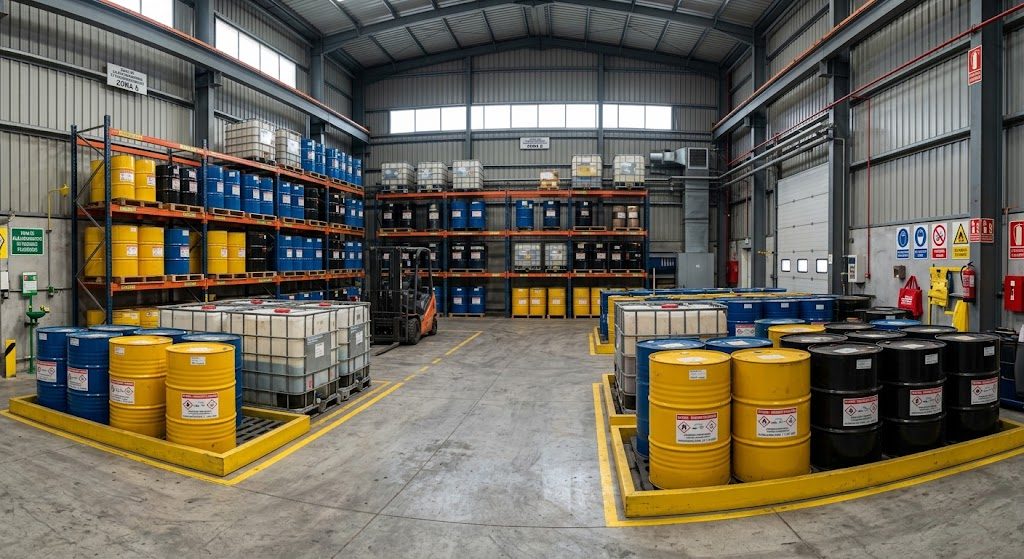
The annual report is a summary of the information held in the chronological record, with the minimum content set out in Annex XV of Spanish Act 7/2022: for each hazardous waste produced, its European Waste Code, the quantity generated and transferred, the receiving waste manager and the treatment operation applied. The data must match the installation's chronological record and the transfer documents for each consignment, and is submitted to the autonomous region where the installation is located.
The most common discrepancies always have the same origin: waste documented by the manager under a different European Waste Code from the one assigned by the producer, a weight estimated at origin and later corrected at the receiving facility, or a consignment whose delivery note was never filed.
Documentation that must be available
- The chronological record (art. 64 of Act 7/2022) for each waste stream, with its European Waste Code, quantity, date and destination for every transfer; it must be kept for at least five years.
- The transfer document for each consignment and its acceptance, in accordance with Royal Decree 553/2020 on waste shipments.
- A current treatment contract with each authorised waste manager, stating its scope and waste codes.
- Valid registration in the Waste Production and Management Register and, where applicable, an up-to-date waste minimisation plan.
- A record of any process changes that have altered a waste stream, its classification or its volume.
With the chronological record up to date, preparing the report comes down to reconciling your own figures against the annual list of intakes provided by each waste manager.
We recommend requesting that list during the first half of January. Any difference in codes or quantities can then be corrected with enough time before the deadline.
Who is required to file it
Article 65.1 applies to all producers of hazardous waste, but the May 2023 agreement of the national Waste Coordination Committee allowed each autonomous region to treat the obligation as fulfilled where the information is already held in its own shipment platforms or in the state e-SIR system. The result is an uneven picture: some regions require it only from installations holding an integrated environmental permit or from waste exporters, while others, such as Catalonia, fold it into their own annual return (DARI), due by 31 March.
Filing after the deadline
If the information is not complete when the deadline arrives, it is better to file the report with the data available together with a note identifying what is outstanding, and to complete it afterwards. Late filing is a formal breach that can be remedied; failing to file at all is treated quite differently.