
Industrial safety in the Valencian Region: filings, records and authorised bodies
The regional government brings together on its Industry Portal the filing of installations subject to industrial safety regulations, the consultation of their records, and the registers of authorised installers and control bodies. Knowing what is required in each case prevents most requests for further information.
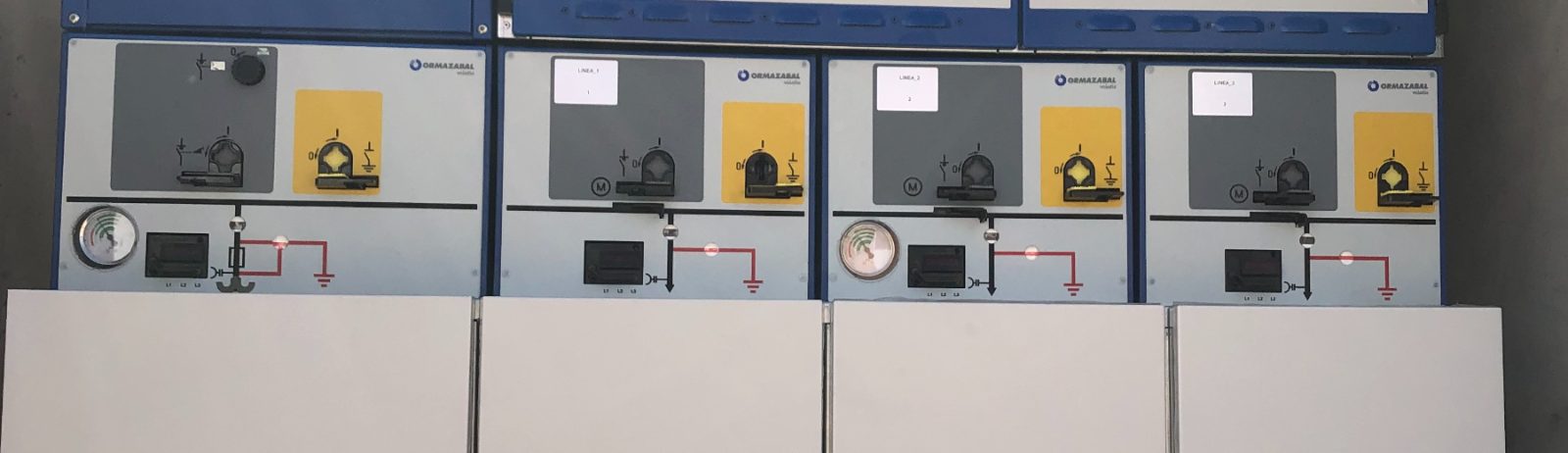
Industrial safety regulations — low and high voltage, gas, pressure equipment, chemical storage, thermal installations and fire protection — do not require prior authorisation in most cases, but they do require a documented commissioning filing before the competent industry authority. An installation is not certified simply by being built, but by having been notified with the complete statutory documentation.
In the Valencian Region this is done through the regional government's Industry Portal, which brings together the commissioning forms, the consultation of files and the official registers of authorised bodies.
Filings for industrial installations
The usual procedure is the commissioning filing, submitted electronically once the installation is complete. The documentation required varies with the regulation and with the capacity of the installation, but the pattern is always the same:
- An installation certificate signed by the authorised installer or company, quoting its registration number.
- A technical project signed by a qualified engineer where the statutory thresholds are exceeded, or a technical design report below them.
- A site supervision certificate, where the installation required a project.
- An initial inspection certificate from an authorised control body, for those installations where the regulation requires it.
- Proof of payment of the corresponding fee and, where applicable, a maintenance contract.
It is important to distinguish the commissioning of a new installation from the extension or modification of an existing one: an increase in capacity, relocating equipment or replacing a main component usually requires its own filing, and this is where uncertified installations most often accumulate.
Commissioning is followed by periodic inspections. Each regulation sets its own interval — often five or ten years depending on the type of installation and its location — and failure to comply is one of the most common findings during inspection.
Consulting records: your own files and public registers
The portal allows two types of enquiry that should not be confused. The private enquiry, using an electronic certificate or access credentials, gives the holder the status of their own files: what has been filed, what requests are outstanding and which installations are registered in their name. It is the way to check a company's actual position before an inspection or a sale.
The public enquiry, by contrast, requires no identification and allows third-party details to be verified: whether an installation company is authorised, whether a control body still holds accreditation in the relevant field, or which bodies may carry out a particular inspection.
Installers and authorised control bodies
Installation and maintenance companies must be entered in the Integrated Industrial Register for each speciality in which they work, with qualified staff and accredited technical resources. Authorised control bodies, which carry out statutory inspections, hold ENAC accreditation and administrative designation for each regulation.
Both registers can be consulted on the portal. It is a one-minute check that avoids the most expensive problem of all: discovering, when filing the application, that the certificate provided is not valid.
Applicable legislation
It is worth bearing in mind that industrial safety legislation is almost entirely national: the regulations that set the technical requirements, the thresholds above which a project is needed and the frequency of inspections are the same throughout Spain. What falls to the autonomous region is not the requirements but the procedure: which body is competent, which form each notification is filed on and what fee is payable.
That is why the Industry Portal is useful as a single point of reference: each type of installation has its own section, setting out both the national regulation that governs it and the regional templates and instructions to be used when filing. Searching by installation rather than by regulation is the quickest way to establish what is required in each case.
- Low-voltage electrical installations: Low Voltage Electrotechnical Regulation (RD 842/2002).
- High-voltage electrical installations: regulations on high-voltage installations and high-voltage lines (RD 337/2014 and RD 223/2008).
- Thermal installations, air conditioning and hot water: Thermal Installations in Buildings Regulation (RD 1027/2007).
- Gas receiving installations: technical regulation on the distribution and use of gaseous fuels (RD 919/2006).
- Pressure equipment: Pressure Equipment Regulation (RD 2060/2008).
- Chemical product storage: Chemical Product Storage Regulation (RD 656/2017).
- Fire protection: regulation on fire protection installations (RD 513/2017) and on fire safety in industrial establishments (RD 2267/2004).
All of them rest on two overarching pieces of legislation worth knowing: the Industry Act 21/1992, which establishes the general industrial safety regime and the system of penalties, and Royal Decree 2200/1995, which governs control bodies and the accredited entities involved in inspections.
Two practical warnings. First, the regulations usually keep transitional provisions for installations predating their entry into force: an older installation need not comply with the current regulation in full, but it must meet the safety conditions and the inspection regime that the regulation itself imposes on it. Second, regional templates and procedural guides are updated frequently, so download them from the portal when preparing the application rather than reusing those from an earlier filing.